Why Not Erythritol? Erythritol Side Effects Explained
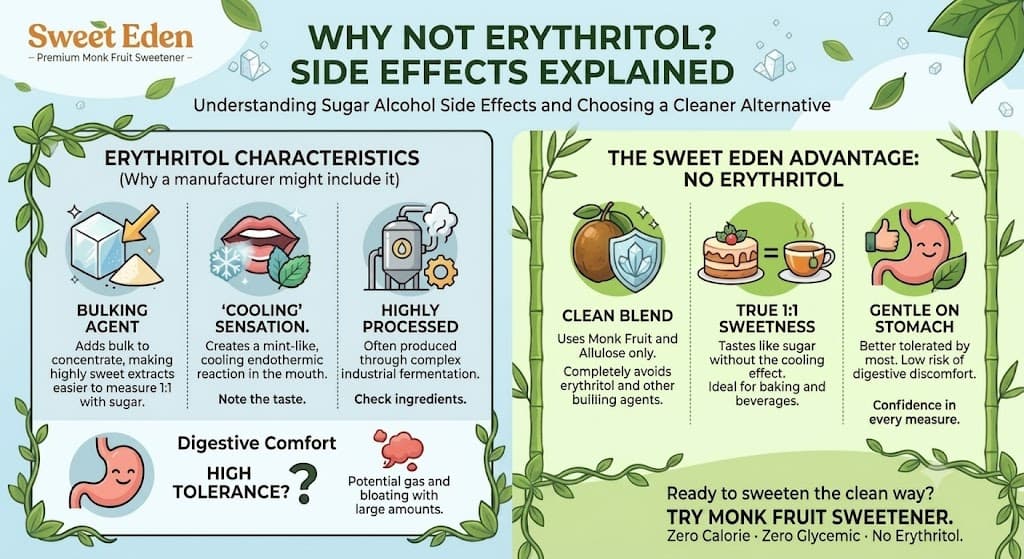
Flip over many “natural, zero-calorie” sweetener products and you may find erythritol listed as a primary ingredient. Erythritol is commonly used to add bulk to highly concentrated sweeteners such as stevia and monk fruit while making them easier to measure like sugar. But erythritol has some characteristics worth understanding before you decide which sweetener is right for you.
What Is Erythritol?
Erythritol is a sugar alcohol, also known as a polyol. It is commonly produced through fermentation and has very few calories and a minimal effect on blood glucose. Because it provides bulk and has a sugar-like appearance, it is widely used in some reduced-sugar and sugar-free sweetener products.
Common Erythritol Side Effects
- Cooling sensation. Erythritol can create a noticeable cooling or mint-like sensation in the mouth. Some people find this especially noticeable in drinks, desserts, and chocolate.
- Digestive discomfort. While erythritol is generally better tolerated than some other sugar alcohols, consuming larger amounts may cause digestive discomfort, including gas, bloating, or loose stools in some people.
- Highly processed ingredient. Erythritol is produced through fermentation and subsequent processing. While it can occur naturally in small amounts in certain foods, commercial erythritol is manufactured for use as a food ingredient.
What Does the Research Say?
Recent research has raised questions about possible associations between elevated erythritol levels in the blood and cardiovascular risk. However, these studies do not establish that erythritol causes cardiovascular disease, and research in this area is still evolving.
For consumers who prefer to limit erythritol, understanding the ingredient list can help them choose products that better match their preferences.
Why Do So Many Sweetener Products Use It?
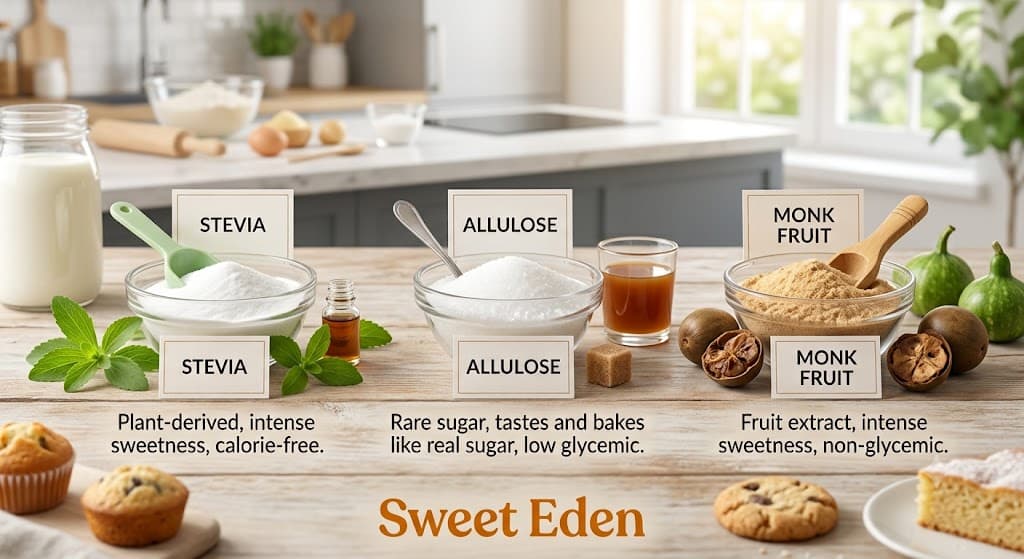
There’s a practical reason: concentrated monk fruit and stevia extracts are extremely sweet and are used in very small quantities. A bulking ingredient can make these extracts easier to measure, pour, and use in everyday recipes.
Erythritol is one ingredient manufacturers may use for this purpose. That means a product marketed as a “monk fruit sweetener” can contain much more erythritol than monk fruit extract, depending on its formulation.
The Sweet Eden Approach: No Erythritol
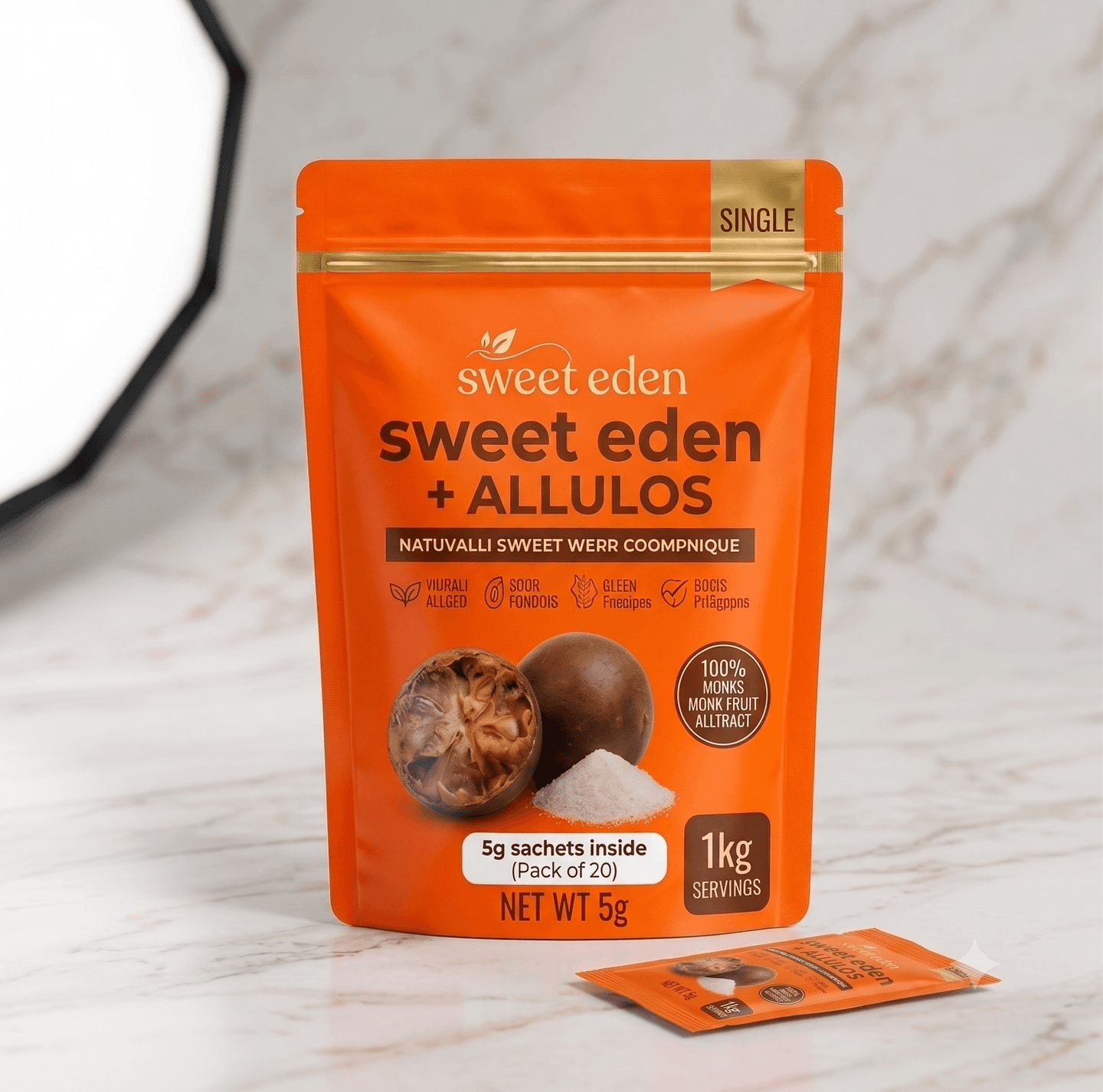
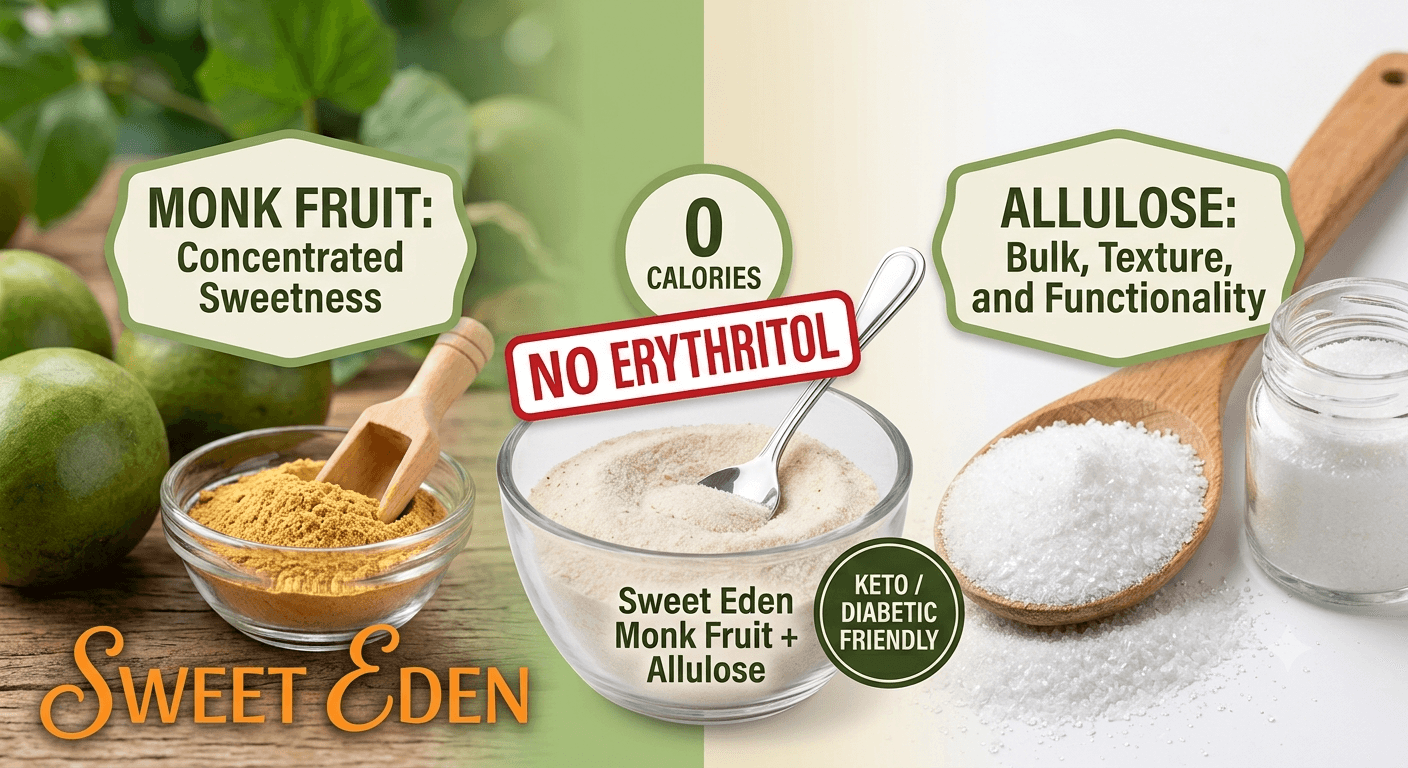
Sweet Eden takes a different approach. Our formulation contains no erythritol, combining monk fruit with allulose instead.
That formulation is designed to:
- Avoid the cooling sensation associated with erythritol.
- Provide a more sugar-like sweetness through the combination of monk fruit and allulose.
- Offer an erythritol-free alternative for people who prefer to avoid sugar alcohols.
If you’ve ever tried a monk fruit sweetener and noticed a cooling finish, check the ingredient list. If erythritol is included, it may be contributing to that sensation. Choosing an erythritol-free formulation can provide a different taste experience.
Sweeten with confidence. Sweet Eden Monk Fruit Sweetener combines monk fruit with allulose and contains no erythritol. Available as a 1:1 powder and ultra-concentrated liquid drops.
Ready to sweeten the clean way?
Sweet Eden monk fruit sweetener — zero calorie, zero glycemic, and made with no erythritol.
Try Sweet Eden monk fruit sweetener →