Stevia vs Allulose vs Monk Fruit: The Honest Comparison
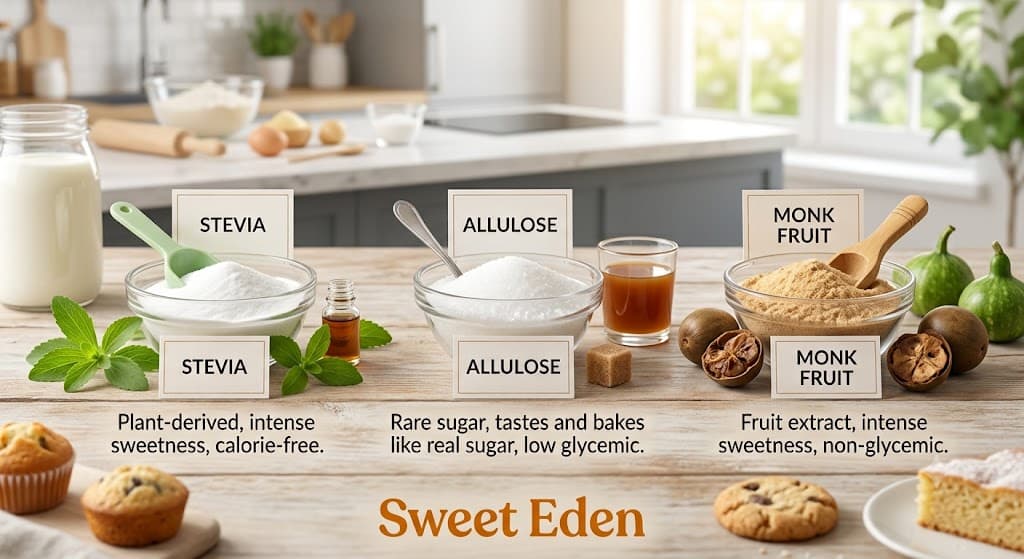
Stevia, allulose, and monk fruit can all help you enjoy sweetness without traditional sugar. However, they differ in taste, calories, baking performance, and overall formulation. Here’s an honest, side-by-side comparison to help you choose.
Quick Comparison Table
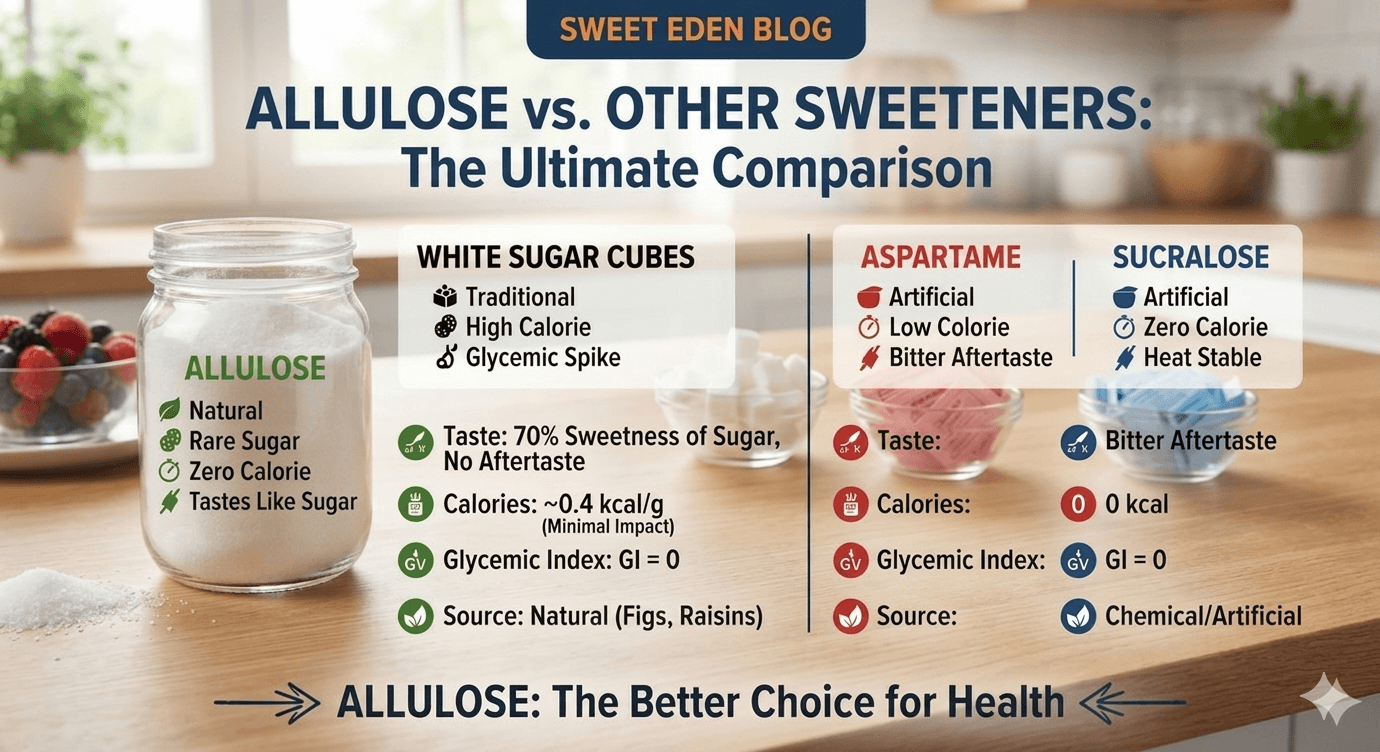
| Factor | Stevia | Allulose | Monk Fruit |
|---|---|---|---|
| Source | Stevia leaf glycosides | Rare sugar (isomer of fructose) | Monk fruit mogrosides |
| Calories | ~0 | ~0.2–0.4/g | ~0 |
| Glycemic impact | Minimal | Minimal | Minimal |
| Aftertaste | Can be bitter or licorice-like | Very clean | Clean, depending on the formulation |
| Baking / Browning | Provides little bulk | Can brown and caramelize like sugar | Needs a bulking ingredient |
| Availability in India | Widely available | Limited | Widely available |
Stevia: Powerful but Polarizing
Stevia is a highly concentrated, very low-calorie sweetener that is widely available. The main consideration is taste: some people notice a bitter or licorice-like aftertaste, particularly at higher concentrations.
Allulose: The Best Baker, Hardest to Find
Allulose is known for its sugar-like taste and baking performance. It can brown and caramelize like sugar, making it particularly useful in baked goods. Its potential limitations include availability, cost, and digestive effects for some people when consumed in larger amounts.
Monk Fruit: The Balanced Everyday Pick
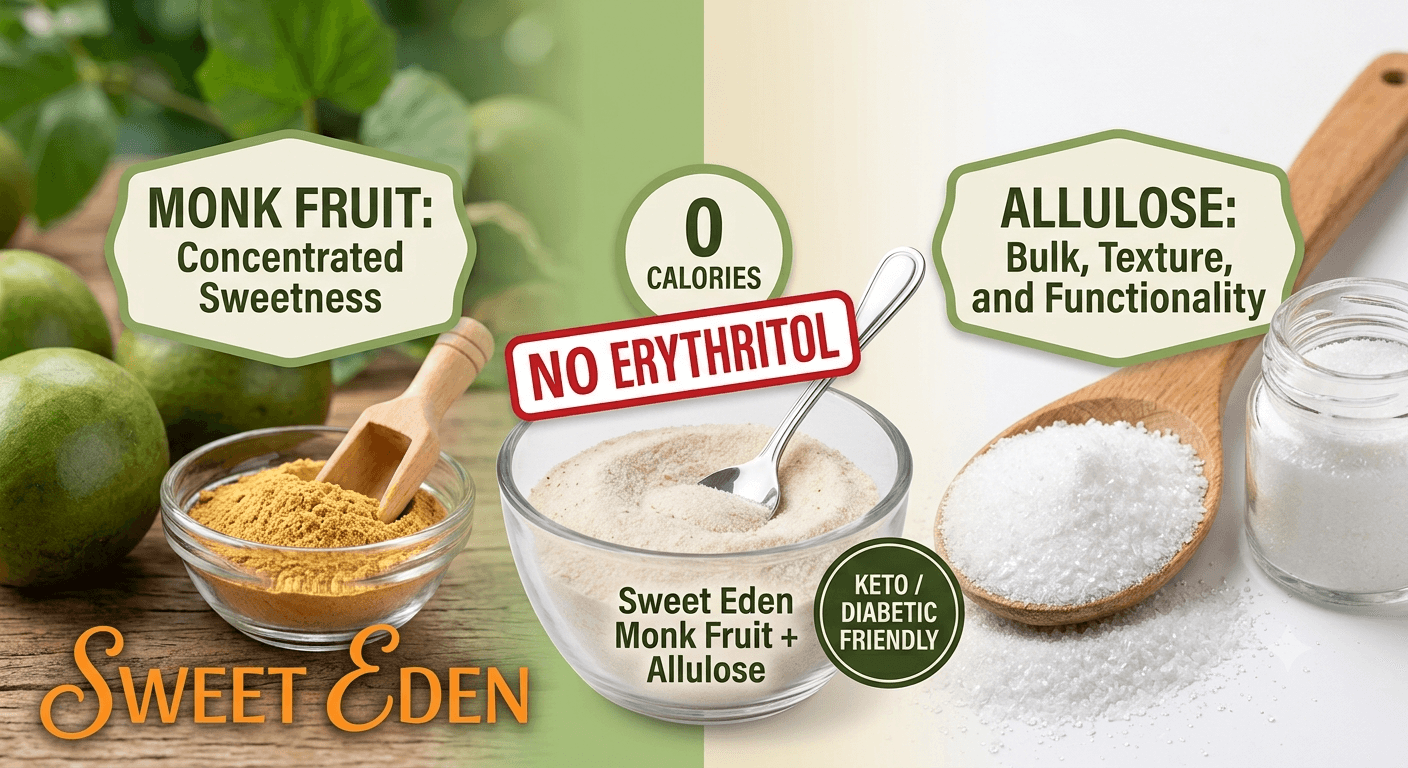
Monk fruit extract is highly concentrated and can provide sweetness without adding significant calories. Its main limitation is that, on its own, it provides very little bulk, so it often needs to be combined with another ingredient for baking and measuring. That’s where product formulation matters.
The Formulation Trap
Many stevia and monk fruit products use erythritol or another bulking ingredient to make concentrated sweeteners easier to measure and use. Erythritol can provide bulk, but some people notice a cooling sensation or digestive discomfort when consuming sugar alcohols.
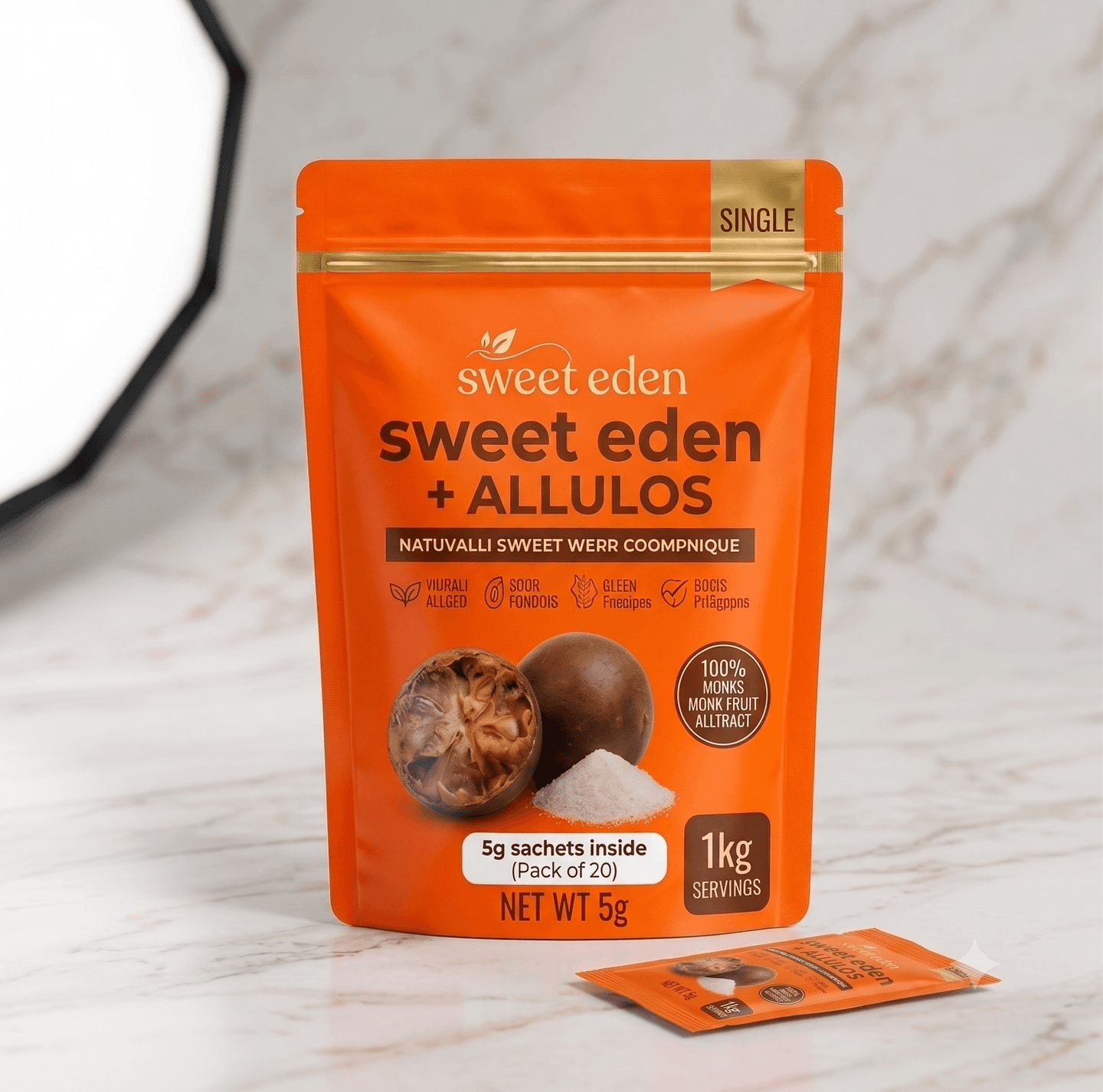
Sweet Eden takes a different approach by combining monk fruit with allulose and avoiding erythritol.
Our verdict: For everyday sweetness in tea, coffee, and cooking, an erythritol-free monk fruit and allulose blend can offer a balanced combination of sweetness, taste, and usability. If you bake often and can source pure allulose, it can be especially useful for recipes where browning and caramelization matter.
Sweeten with confidence. Sweet Eden Monk Fruit Sweetener combines monk fruit with allulose and contains no erythritol. Available as a 1:1 powder and ultra-concentrated liquid drops.
Ready to sweeten the clean way?
Sweet Eden monk fruit sweetener — zero calorie, zero glycemic, and made with no erythritol.
Try Sweet Eden monk fruit sweetener →